
Once a Farmer, Always a Farmer
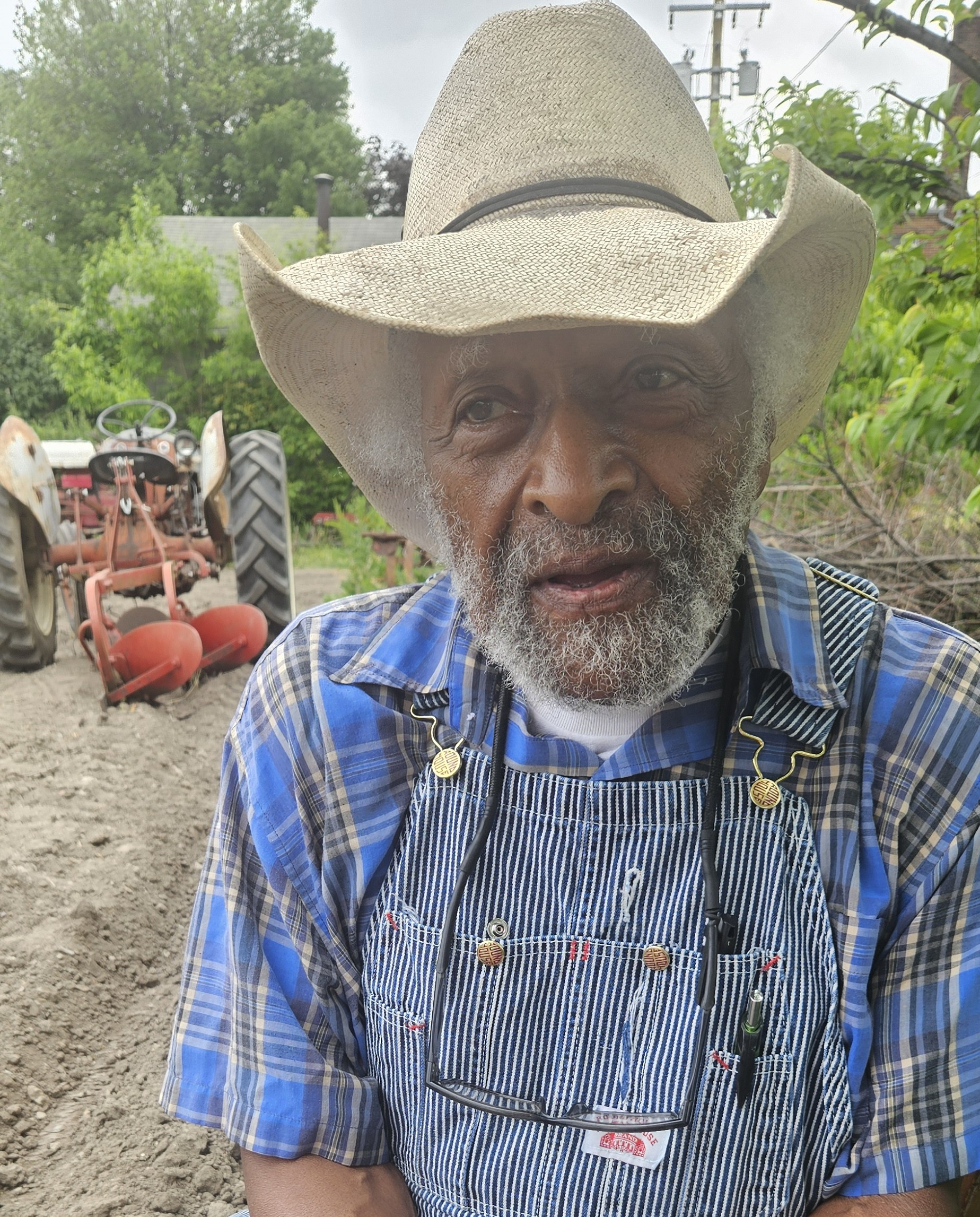
It doesn’t matter if you live in the country or the city. Once a farmer, always a farmer.
Willie Patmon grew up on a farm in Crescent, Oklahoma, the eldest of seventeen children. His farming ancestry dates to his great grandfather who was born a slave. After emancipation, his grandfather acquired land in Georgia to continue farming. Willie’s grandfather eventually moved to Oklahoma in the 1920’s, purchasing two hundred acres of farmland. It was this family farm where Willie was born in 1934.
He learned to grow crops and livestock while he was young out of necessity---his hands were needed to help provide for his siblings. He attended school after the crops were harvested each fall, excelling at his studies and graduating at the top of the class from Douglass High School in Crescent. After high school, he attended Langston University where he majored in Industrial Arts and Machine Design.
Service in the U.S. Army led him to a station in Detroit. When his service time was over, his heart wanted to return to farming and life in rural Oklahoma. But it was love that kept him in Detroit where he married and raised a family.
Over time, urban Detroit aged, leaving blight and vacant lots in its wake. “Any good farmer can’t stand to see land wasted without growing something on it,” Patmon said.
And thus, his quest to farm (again) began in 2012. His fields--- vacant and abandoned city lots purchased from the city of Detroit through its Black Farmer Land Fund. His objective---restoring them to fertile fields where produce is raised to feed Detroit schools, shelters, soup kitchens, and neighborhoods.
By partnering with schools and youth organizations, an extra layer of good comes from teaching children both how to raise and prepare fresh garden vegetables into nutritious meals. Tours, samples, and education are free to every school aged child he encounters.
After establishing WJP Urban Farms in 2022, Patmon donated the lots back to the to the Detroit Black Farmers Land Fund for them to continue his social mission of producing food, creating green space, and teaching a generation to become more self-sustainable through personal food security. Transition to USDA certified organic production began in 2023.
City lot or country mile, it takes a farmer, and a farmer’s mindset to take something thrown away and make it useful, no matter where he or she lives.
This work was supported by the AgrAbility Competitive Program of the USDA National Institute of Food and Agriculture (NIFA), grant number 2022-41590-38121.