
Looking back on the 2026 AgrAbility National Training Workshop
Nearly six months have passed since Michigan AgrAbility welcomed partners, clients, and other participants from across the country to Traverse City for the 2026 National Training Workshop (NTW). While an unexpected and nearly unprecedented blizzard altered many travel plans, those who were able to join brough creativity, resilience, and a collaborative spirit that have been key tenets of AgrAbility and its network.
With travel significantly disrupted, the conference looked different than initially planned. Some attendees met up at larger airports, rented vehicles, and drove north together to Traverse City. Others were unable to attend at all. While they were missed, the smaller group – and time spent waiting out a state of emergency declaration and watching snow removal together – provided ample time for meaningful conversations and discussions, and new connections among participants. It was a good reminder of the value of in-person connection to drive passion into action.
There were several key themes that emerged from the sessions and conversations during the week. One highlight is the importance of addressing the whole person – connecting physical health, chronic conditions, aging, stress, well-being, and in some cases, injury. Helping someone remain active in their agricultural work is often more than providing a list of recommendations or AT suggestions. We are more successful when we approach each case with the whole person and their context – goals, support systems, and their daily realities.
Another theme that emerged was that accessibility on the farm extends beyond just production. Local and state programs highlighted assistive technology opportunities to get people outdoors using a track chair loan program as well as demonstrations from the state’s assistive technology office discussing recreational AT – including crafts, games, and outdoor recreation. Incorporating accessibility in more ways benefits not only people with disabilities but also aging adults, families, and rural communities.
For many attendees, the conference tours were a highlight of the week and offered a glimpse into the diversity of northern Michigan agriculture and rural communities.
The first stop for the Leelanau County tour was the Cherry Republic processing facility and included a tour of the bakery where the famous Boomchunka cookies are made. The group then visited the scenic Sleeping Bear Dunes National Lakeshore. The Friends of Sleeping Bear, who had presented earlier in the week about their accessibility initiatives and track chair lending program, provided the opportunity to get hands on experience trying out a few of the chairs and talking about their volunteer and outreach work. They had lunch at Cherry Republic’s Public House before heading up the Leelanau Peninsula to visit MSU’s Northwest Horticultural Research Station to learn about specialty crop research in the region.
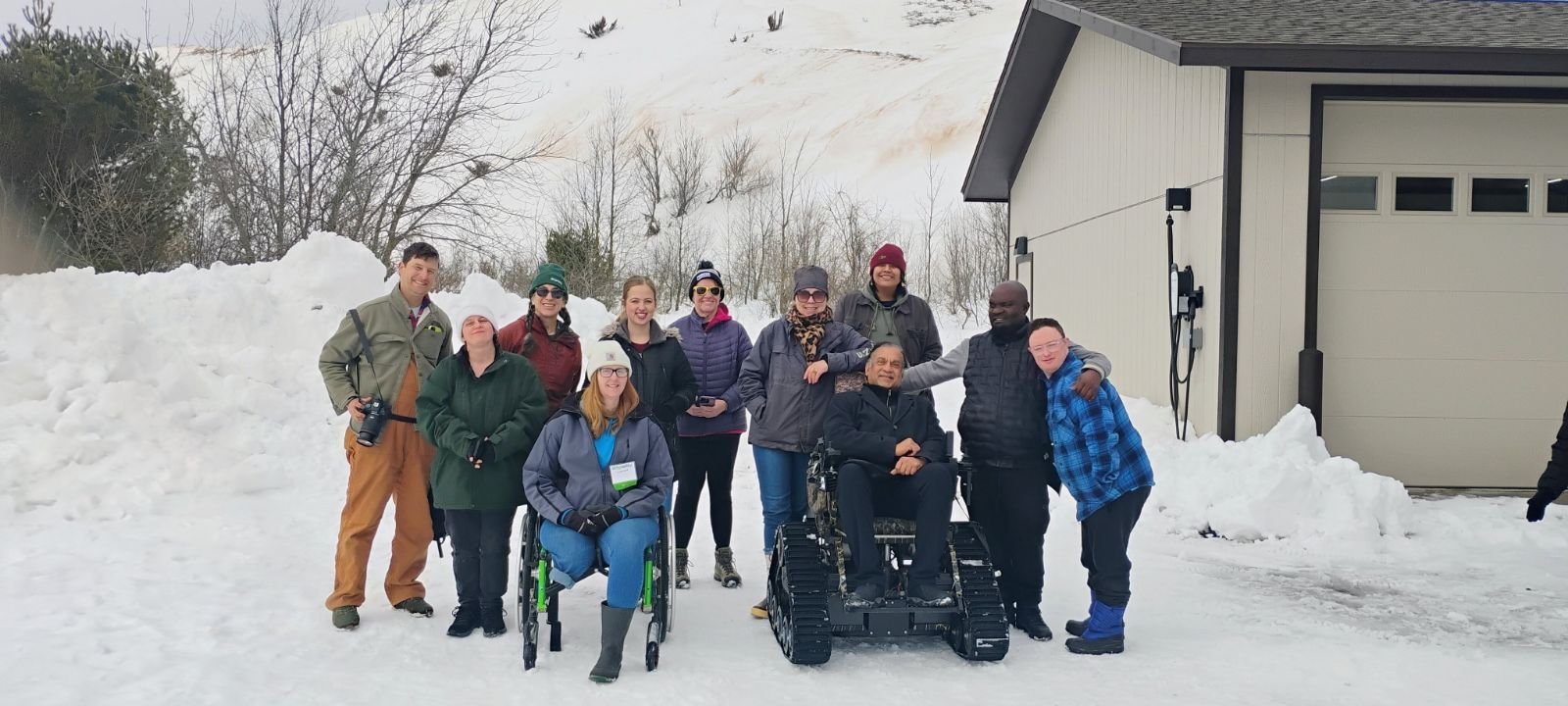
The Leelanau tour group pauses for a photo at the base of the Sleeping Bear Dune climb.
The second tour covered Grand Traverse County, starting with a visit to Hilbert’s Honey Co. headquarters, followed by lunch at the Grand Traverse Regional Land Conservancy’sMitchell Family Conservation Center. They ended the day at Olds Brothers Maple Syrup where they had the opportunity to check out the sugar bush, tubing lines, and production taking place at the sugar shack. While March in northern Michigan wasn’t ideal this year, it was a great opportunity for participants from out of town and out of state to see this snapshot of a quintessential northern springtime activity.
The final tour visited Benzie and Manistee Counties and began at Northern Blessings Alpacas, which operates as both agritourism, breeding and showing, and selling fiber – and the massive Great Pyrenees guard dogs were a highlight alongside their hoofed companions. After a near-miss with the tour bus and the dirt driveway, the group headed to St. Ambrose to visit the honey processing facility – welcoming the bees back from their winter pollination elsewhere – and Meadery, followed by lunch. The Grand Traverse Regional Land Conservancy featured again with a visit to Misty Acres rotational grazing demonstration farm where the cows gazed at the group from across the pasture. The day ended with a stop at Iron Fish Distillery, Michigan’s first farm based distillery. The group learned about the history of the facility and how it had come to be, how the rye and other local crops are incorporated into the process, and how whiskey, rye, and Iron Fish’s other spirits are made, distilled, and aged.
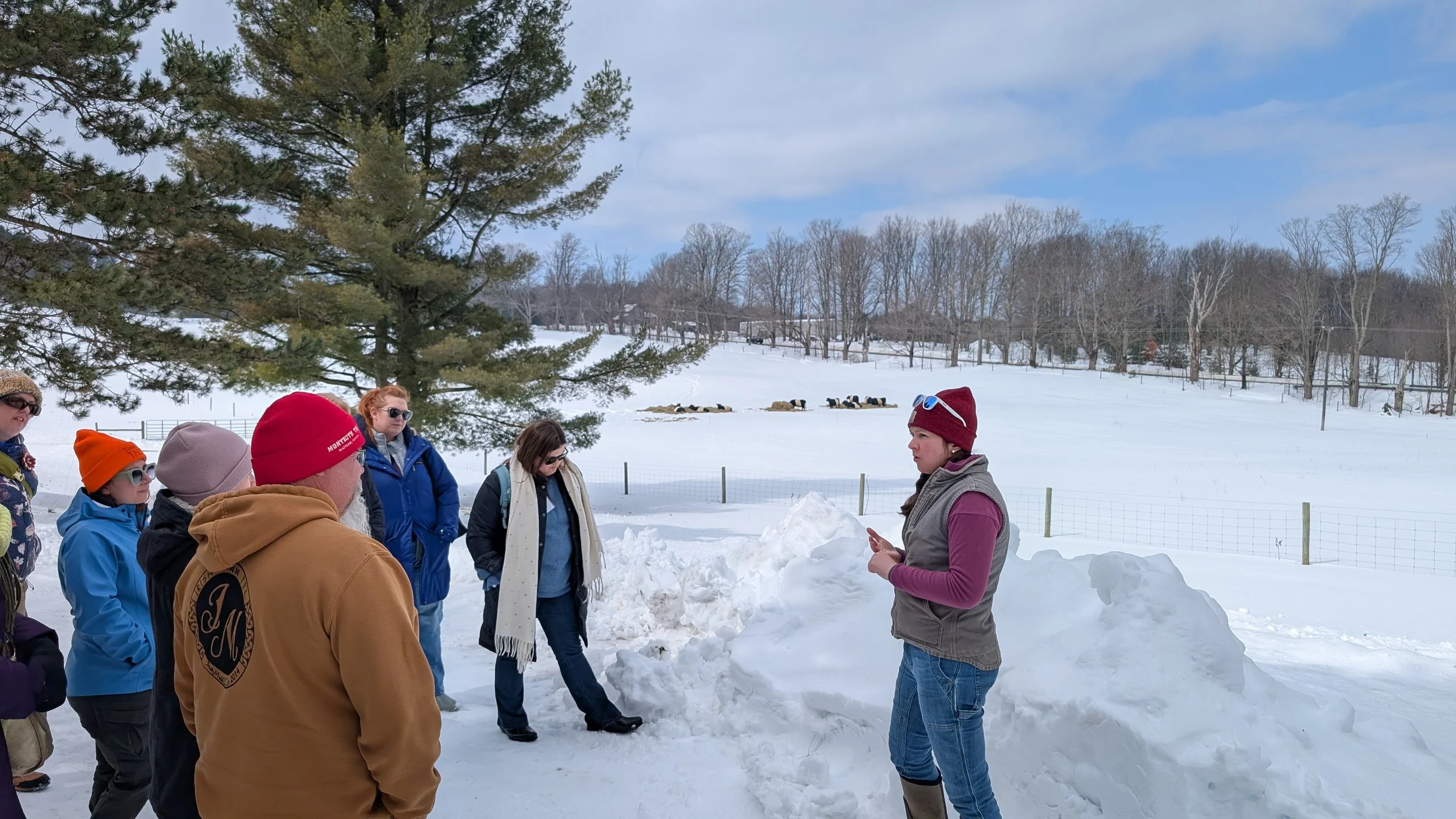
Misty Acres’ farm manager discusses rotational grazing in front of a snowbank, with belted Galloway cows in the distance in the pasture behind them.
The tours highlighted the diversity of Michigan agriculture while providing opportunities for informal networking and conversation among attendees from different backgrounds and regions.
Michigan AgrAbility is grateful to the attendees, presenters, volunteers, sponsors, and community partners who helped make the 2026 workshop a success. The lessons learned and conversations started in Traverse City continue to inform our work as we strive to help farmers remain safe, productive, and independent.
The ideas shared during this year's National AgrAbility Training Workshop serve as a reminder that helping people remain active in agriculture is more than equipment or accommodations. It is about supporting the whole person, understanding the realities of agricultural work, and building communities where everyone can participate. Michigan AgrAbility looks forward to continuing to work alongside farmers, families, and partners to ensure agriculture remains a viable and rewarding way of life for all.
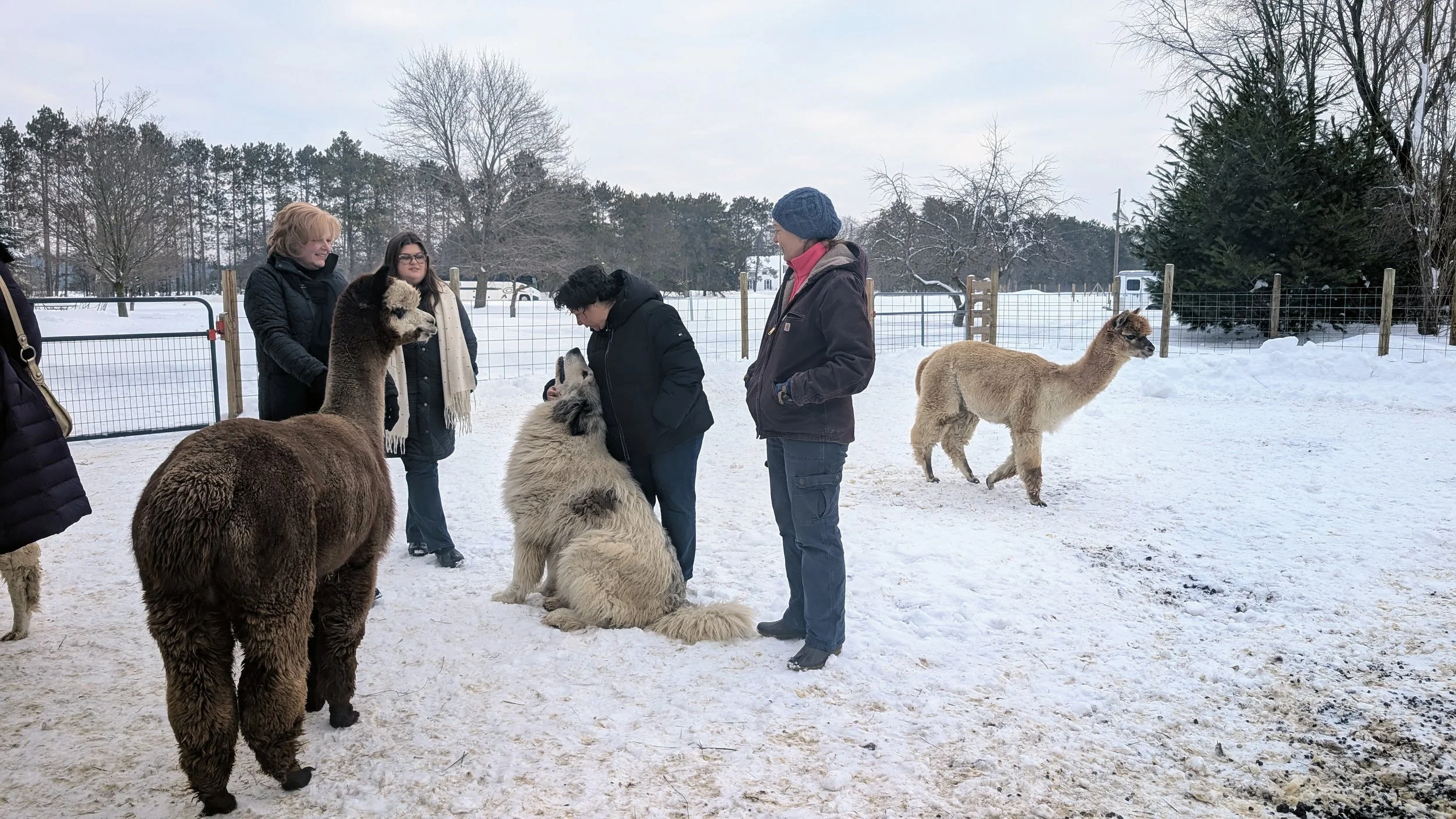
A participant pets a Great Pyrenees dog as others look on, with two alpacas nearby.